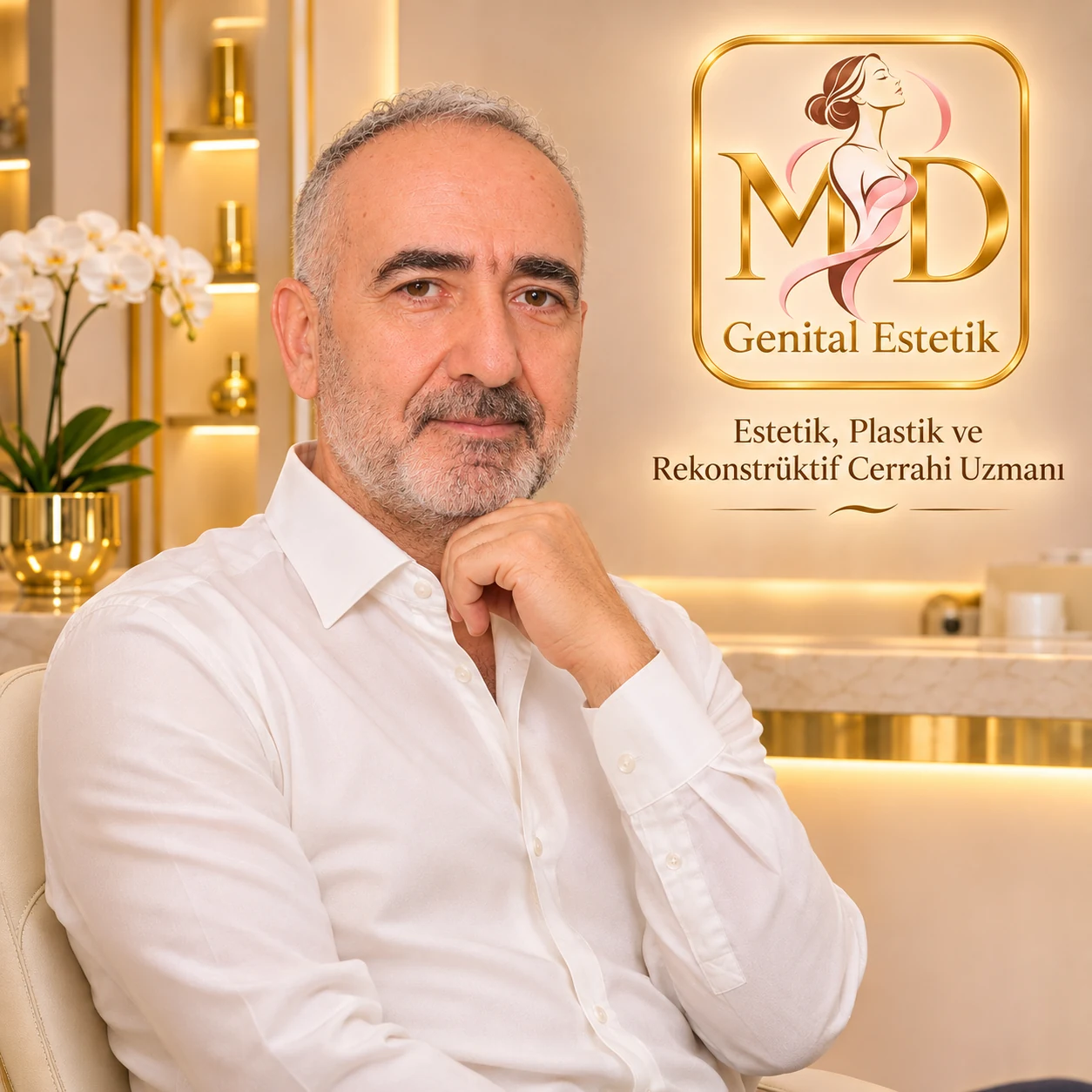
 Op. Dr. Mehmet DoğanSpecialist in Aesthetic, Plastic and Reconstructive Surgery
INTIMATE SURGERY
Intimate surgery procedures
Anatomy, function and privacy are assessed together when considering genital procedures. At our practice, clinical suitability and individual needs come first.
Surgical areas ↗Visit my main website ↗





INTIMATE SURGERY
Surgical areas

Labiaplasty
Labial asymmetry or excess tissue may cause mechanical discomfort in some individuals. Surgical planning considers incision limits and the surrounding neurovascular structures. At our practice, a tissue-sparing approach avoids unnecessary removal.
Learn more ↗
Hymenoplasty
Hymenal tissue varies naturally between individuals. Neither bleeding nor a particular appearance after surgery can be guaranteed. At our practice, procedure options and limitations are explained without unrealistic promises.
Learn more ↗
Vaginoplasty
Postpartum tissue changes do not automatically require surgery. Pelvic-floor therapy may be appropriate for certain symptoms. At our practice, functional findings and individual expectations guide treatment planning.
Learn more ↗
Labia Majora Procedures
Options may include tissue reduction or volume correction in appropriate cases. Skin elasticity and fat distribution influence technique selection. At our practice, proportion and tissue safety are considered together.
Learn more ↗
Puboplasty
Mons pubis prominence is not necessarily caused by excess fat alone. Skin laxity and prior surgical scars influence the choice of procedure. At our practice, the scope of surgery follows regional anatomy.
Learn more ↗
Perineoplasty
Scars may follow previous episiotomy or perineal tears. Surgery may aim to restore tissue integrity and support where appropriate. At our practice, existing scars and nearby muscle anatomy inform incision planning.
Learn more ↗Images are illustrative and do not show actual patient outcomes or anatomy.
MY SURGICAL APPROACH
Good surgical planning considers both what to change and what to preserve.
I consider anatomical differences, function, individual expectations and confidentiality together. Surgery is not always the only option; medical suitability and avoiding unnecessary intervention remain priorities.
Op. Dr. Mehmet DoğanEstetik, Plastik ve Rekonstrüktif Cerrahi Uzmanı
Surgical areas ↗